Free Training
Please complete the form below to book your place on one of our free trial classes. You will get an email confirmation of your place, subject to availability.


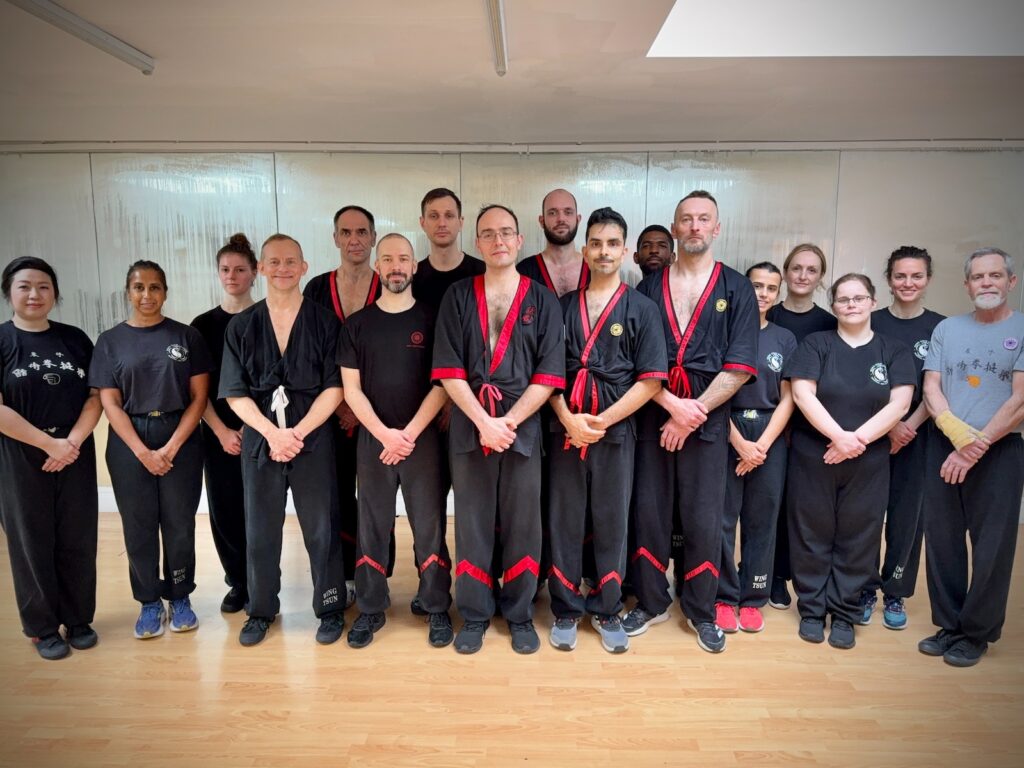
In Part 1, I explored what it means to train with heart and how that creates community. But there’s another dimension I’ve observed over the years. How the combination of practice and community supports wellness in multiple ways.
Students who train with heart show up more consistently. Not because they’re more disciplined (though some are), but because they’re invested. They care about being there for their training partners. They want to honour what they’re learning. Consistency, as we know, supports wellness through structure and rhythm.
Students describe feeling different after training. They talk about feeling calmer, more focused, less caught up in the day’s anxieties. What creates this shift? Is it the consistent practice, the attention demanded by the training, the community, or something in Wing Tsun itself? I’ve observed similar qualities in others deeply committed to other disciplines, and I keep noticing it here, week after week, in students who train with heart.
The bonds formed through regular training create natural support. When someone’s struggling, their training partners notice. Not in an intrusive way, just in the way that happens when you see the same people twice a week for years. “You okay? You seem off today.” Sometimes that’s enough.
Training with heart creates investment beyond individual benefit. When you care about your partners’ progress, celebrate their achievements and feel truly proud when they complete a grading, you’re part of something larger than your own journey. This sense of contribution and connection matters for people’s sense of wellbeing.
The practice itself also matters. The Yee-Chi-Kim-Yeung-Ma (二字鉗羊馬, character two goat riding stance) teaches awareness of posture and how you carry tension. Saam-Pai-Fut (三拜佛, praying thrice to Buddha), a breathing exercise within the first form, demands presence and cultivates patience. Chi Sau requires responsive attention; you must feel and react, not overthink. These practices don’t promise transformation, but students often describe becoming more aware of their breathing, carrying less tension, and finding it easier to be present.
These are observations from my years of training and teaching. Students who engage deeply describe their practice as meaningful, talk about Wing Tsun not as a hobby but as part of their identity, weather life’s difficulties whilst continuing to train, and support each other through challenges.
Is this unique to Wing Tsun? Of course not. Similar bonds likely exist in dance companies, orchestras, or any community built around serious practice, and I know it’s real here because I see it every week in our schools.
People often start Wing Tsun for practical reasons: self-defence, fitness, curiosity. They then stay because regular training becomes an anchor when everything else feels chaotic. Because their training partners notice when they’re absent and reach out. Because they discover they’re learning about themselves, not just techniques. Because their presence matters, to partners who count on them for good practice, to newer students seeking guidance, to a community strengthened by their commitment. Because teaching becomes another way of learning, keeping this beautiful art alive.
They describe belonging, purpose, and connection. This is what heart in practice creates.
By Si-Hing Hari Walters
Please complete the form below to book your place on one of our free trial classes. You will get an email confirmation of your place, subject to availability.